
Income inequality in Singapore : causes, impacts and solutions explained
Singapore ranks among the wealthiest nations on earth, yet its income distribution gap remains a persistent tension beneath the glossy skyline.
In 2023, the country’s Gini coefficient stood at 0.454 before government transfers and taxes — one of the highest among developed economies — dropping to 0.398 after redistribution measures.
That gap between raw inequality and adjusted figures tells a story worth unpacking carefully.
The structural roots of wealth disparity in Singapore
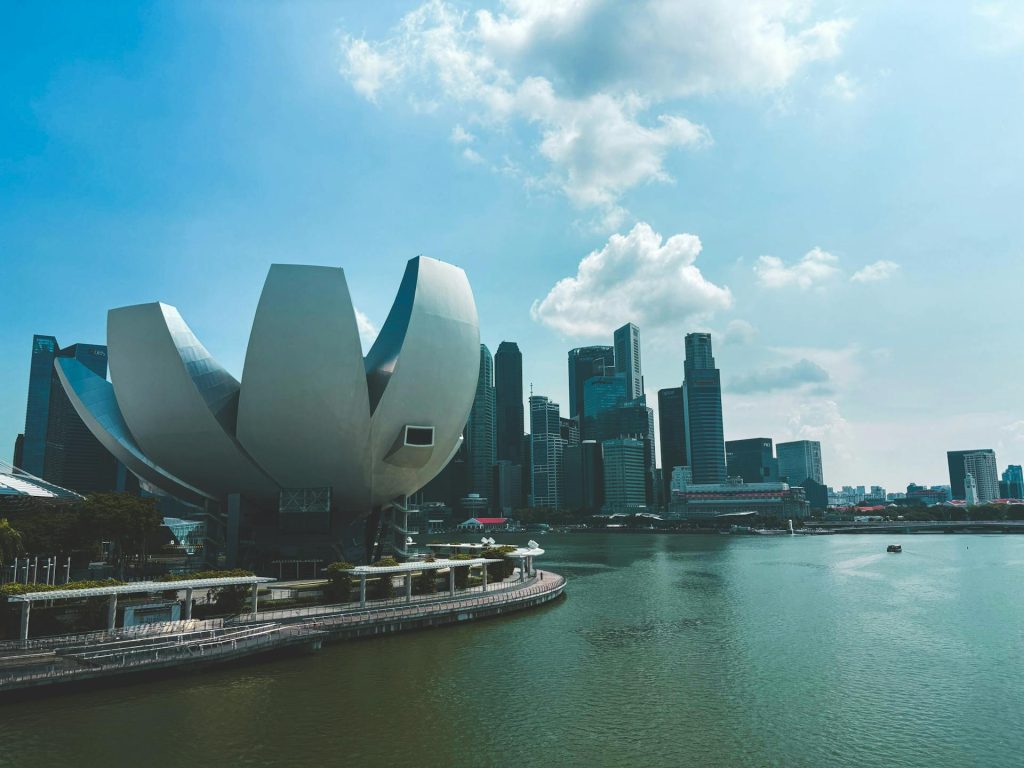
Singapore’s economy is built on a handful of high-value sectors : finance, logistics, biomedical sciences, and advanced manufacturing.
These industries generate enormous wealth, but they concentrate gains among highly skilled workers, leaving lower-wage employees in services, construction, and domestic work increasingly behind.
The bifurcation isn’t accidental — it reflects deliberate industrial policy that prioritised knowledge-intensive growth.
Education plays a decisive role. Students who enter elite schools — through the Primary School Leaving Examination streaming system — access better university pathways and, ultimately, higher-earning careers.
Those who don’t face a compounding disadvantage. This educational stratification mirrors what supply chain analysts observe when mapping vendor ecosystems : early-stage sorting mechanisms determine downstream performance far more than any late-stage intervention.
Demographics add another layer. Singapore’s workforce includes a large segment of foreign workers, many in low-wage sectors such as construction and domestic service.
Their earnings sit well below median resident wages, and this structural segmentation inflates headline inequality figures without necessarily reflecting deteriorating conditions for citizens alone. Still, the gap is real and growing within the resident population itself.
The following factors consistently appear in academic and policy analyses of Singapore’s income gap :
- Technological displacement of mid-skill routine jobs
- Wage polarisation between top earners in finance and bottom earners in F&B or retail
- Differential access to professional networks and mentorship
- Intergenerational wealth transfer through property ownership
Property ownership is particularly significant. HDB flat appreciation has benefited longtime resident families, while younger Singaporeans entering the market face prices that increasingly decouple from wage growth — a classic sign of asset-driven inequality compounding earned-income disparities.
Socio-economic impacts and regional comparisons
Wealth concentration in Singapore generates measurable social consequences. Social mobility, though still higher than in many Asian neighbours, has shown signs of stagnation since the 2010s.
Research from the Singapore Management University suggests that children born into the bottom income quintile have a significantly lower probability of reaching the top quintile than their peers in Japan or South Korea — countries with historically more compressed wage structures.
Regionally, the contrast is instructive. Malaysia’s Gini coefficient hovers around 0.407, while Thailand’s exceeds 0.430. Singapore sits in a comparable range, but with a GDP per capita roughly three to four times higher.
High absolute wealth combined with persistent relative inequality creates a specific social tension : people are materially better off, yet feel left behind by neighbours who seem to benefit disproportionately from economic growth.
| Country | Gini coefficient (pre-transfer) | GDP per capita (USD, 2023) |
|---|---|---|
| Singapore | 0.454 | ~88,000 |
| South Korea | 0.402 | ~33,000 |
| Malaysia | 0.407 | ~13,500 |
| Japan | 0.381 | ~34,000 |
This data underscores a critical nuance : inequality metrics must be read alongside absolute living standards.
A supply-side perspective — tracking where value is created and how it flows through an economy — reveals that Singapore’s redistribution infrastructure is sophisticated, but its reach has limits when wage floors remain modest and asset ownership stays concentrated.
Mental health data adds texture. A 2022 survey by the Institute of Mental Health found elevated stress levels among lower-income Singaporeans, linked directly to financial precarity and housing anxiety.
These aren’t abstract statistics — they represent households making daily trade-offs between healthcare, education fees, and food budgets.
Government redistribution tools and their real-world effectiveness
Singapore’s government has deployed a range of targeted interventions. The Workfare Income Supplement scheme, introduced in 2007, provides cash transfers and CPF top-ups to lower-wage workers aged 30 and above.
By 2023, payouts exceeded SGD 900 million annually — a meaningful commitment that directly supplements earnings for workers in cleaning, security, and food service sectors.
The Progressive Wage Model, championed by the National Trades Union Congress, mandates sector-specific wage ladders tied to skill upgrades.
Rather than a blanket minimum wage — which Singapore resisted for decades — this approach links pay increases to training certification, creating a structured pathway for low-wage workers.
Think of it as building traceability into compensation : every wage level corresponds to a verifiable competency milestone.
SkillsFuture, launched in 2015, allocates credits to every Singaporean adult for approved training courses. The programme logic is sound — human capital investment as a counterweight to technological displacement — but uptake among the lowest earners remains uneven. Those most in need of reskilling often face time and bandwidth constraints that credits alone cannot solve.
Three policy priorities dominate the current reform agenda :
- Expanding Progressive Wage coverage to more sectors beyond the initial cleaning, security, and landscape industries
- Strengthening housing affordability policies to prevent asset-driven inequality from compounding wage gaps
- Improving targeting precision in social transfers to reach households that fall through existing scheme criteria
Measurement matters as much as policy design. Without granular, real-time data on household income flows — across resident and non-resident populations, across age cohorts and housing types — even well-funded programmes risk misallocating resources.
This is exactly where dashboard-driven visibility shifts from a business tool to a governance imperative : knowing where gaps exist, in near real-time, determines whether interventions land where they’re most needed.
What Singapore’s inequality trajectory signals for the next decade
The trajectory ahead hinges on whether wage growth in lower-skill sectors can outpace asset price inflation — particularly in property. If it cannot, the Gini coefficient may compress on paper through transfers while structural inequality deepens in practice.
Policymakers at the Ministry of Finance have acknowledged this tension explicitly in recent budget statements.
AI-driven automation will hit mid-tier service jobs hardest over the next five to eight years. Singapore’s bet is that SkillsFuture and Progressive Wages create enough adaptive capacity to absorb that shock.
The outcome will depend on execution speed and data quality — two variables that governments, like supply chains, consistently underestimate until a disruption forces a reckoning.